English NumismaticPrevious | English Numismatic Index | NextHome |
Iohn Rennals Token 1668 Lace Tokens. 1648-1679
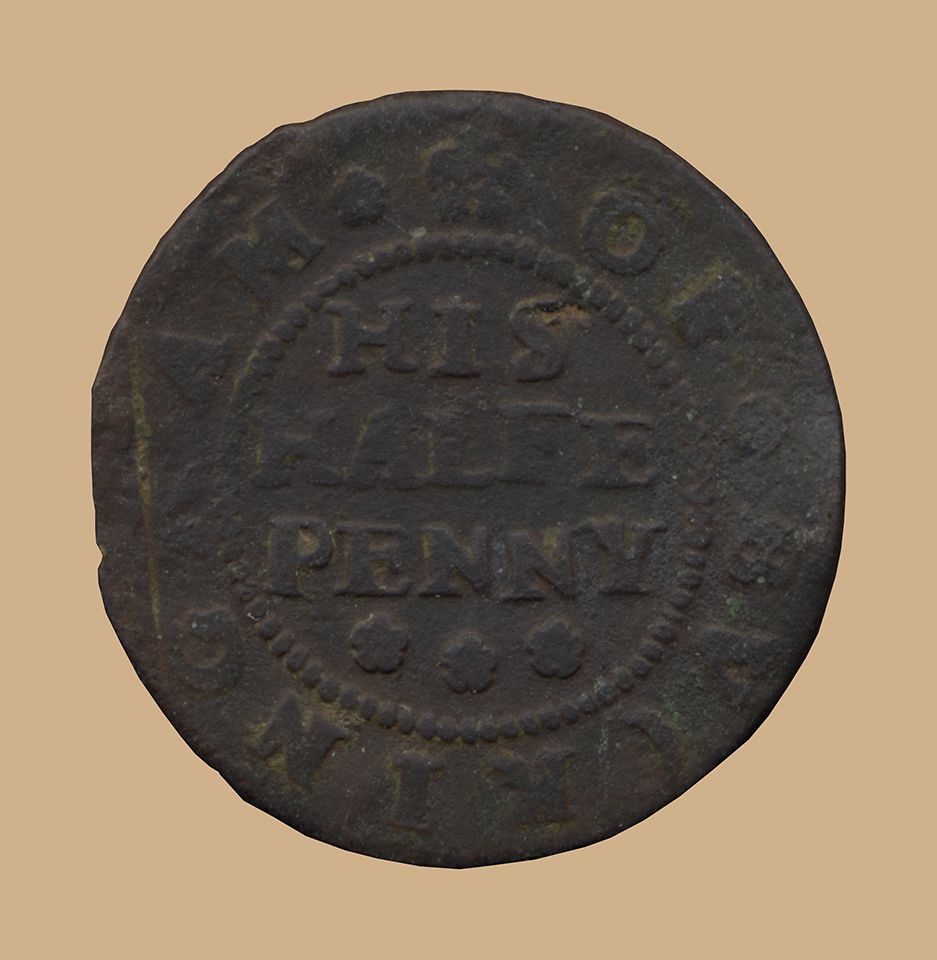
Thomas Wright, "The Romance of the Lace Pillow" 17th century tokens1) James Brierly,Olney, Buckinghamshire: This token is listed by Williamson, but he has not linked it to the lace trade. This is perhaps explained by his note at the beginning of the Buckingham chapter, where he says "The Editor regrets that he has been unable to find any collector specially interesting himself in the tokens of Buckinghamshire, and he has consequently been unable to obtain any notes on the issuers." 2) Peter Reynoldes, Buckingham: Again, presumably for the reasons given above, although Williamson has listed this token, he has not linked it to the lace trade in spite of the image of a strip of lace on it. 3) Iohn Rennals, Buckingham, 1688: Ditto. 4) The lace tokens of St. Neots, Huntingdonshire: Both these tokens are listed by Williamson. They are both "town issues", i.e. they were struck by the authority of the town council rather than by local traders. A quick Google search on the net shows that lace-making did indeed take place at St. Neots, which would explain the images. As they were not actually issued by lace traders, this would explain why Williamson has not linked them to the trade. Dalton & Hamer's The Provincial Token-Coinage of the 18th Century My example is the "Iohn Rennals" token of 1668. It is a very thin copper coin with a patina that can only be politely called 'aged'. The reverse is fairly readable, but the lace strip and lettering on the front is just barely discernable. Very thin, weight is 2.0 grams, and an irregular 2 cm in diameter. first posted 3/27/2009 |

 |